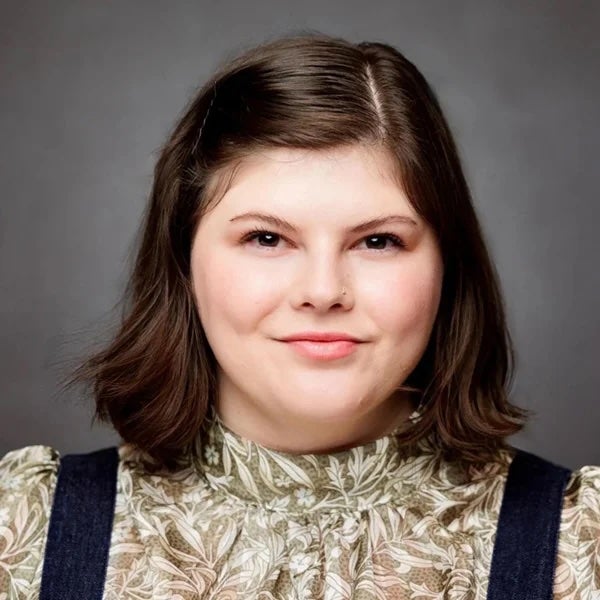
Taylor Damann
Assistant Professor of Political Science
SURF Mentoring
Potential projects/topics: This project involves building a large, original dataset on civil society organizations that provide financial, material, and other forms of military-related assistance to the Ukrainian government. Student researchers will focus on systematically identifying relevant organizations and collecting structured information from publicly available sources such as organizational websites, social media, news articles, and open databases. The project is well suited for undergraduates with little or no prior research experience. Students will gain hands-on training in core social science research skills, including source identification, data collection and coding, basic data management, and assessing the reliability of information. The work will also introduce students to broader questions about wartime civil society, international conflict, and the role of non-state actors in global politics.
Potential skills gained: data collection; data management
Required qualifications: none listed
Direct mentor: Faculty/P.I.
Research Areas
Professor Damann specializes in international relations with a particular emphasis on conflict and gender. Damann's research (featured in International Organization, Proceedings of the National Academy of Sciences, Comparative Political Studies and the Journal of the Royal Statistical Society: Series A) investigates how citizens’ attitudes and behaviors in conflict contexts are shaped by exposure to violence, societal narratives about outgroups, and gender dynamics. Her research investigates several interrelated topics in these areas, including the impact of conflict-related sexual violence on community resistance, the effects of historical trauma on wartime mobilization, and the role intergenerational learning plays in allowing gender and group biases to endure. Damann's research spans a variety of cross-national contexts, with a specialization in Eastern Europe and the Russo-Ukrainian conflict. By integrating theories from conflict scholars and psychologists, and employing mixed methodologies to uncover complex relationships, she offers the field insight into how emotions, identity and trauma shape political behavior in conflict.